宁海双水未来社区低碳馆
First Large-Scale Engineered Mass Bamboo Public Building in China
中国首座大型工程竹公共建筑
Ninghai Municipal Architecture Design Office, Ltd. & Zhejiang University-Ninghai Joint Research Center for Bio-based Materials and Carbon Neutral Development
宁海县建筑设计院有限公司 & 浙江大学-宁海生物基材料与碳中和发展联合研究中心
The Double-Water Low-Carbon Community Center is a pioneering public facility located in Ninghai, Zhejiang Province, China. As the first officially approved, large-scale multifunctional public building constructed primarily with engineered bamboo (glubam), it sets a new global benchmark for sustainable public infrastructure.
Spanning 2,030 square meters with a height of 15 meters, this two-story facility serves as both a community center and a public services hub. It harmonizes renewable biomass materials with high-performance structural engineering to realize a vision of "Net-Zero" operation — demonstrating that engineered bamboo is a viable, resilient, and aesthetically powerful solution for large-scale public infrastructure.
The Double-Water Low-Carbon Community Center is a 2-story public facility located in Ninghai, Zhejiang Province, China. It exemplifies a seamless synthesis of biophilic architectural philosophy, advanced structural engineering, and sustainable materials.
Designed under the concept of "Biophilia: Breath and Light," the building is envisioned as a "green hometown" derived from the organic forms of mountains, forests, and waves. To realize this vision, the engineering team utilized glued-laminated bamboo (glubam) — not merely as a decorative finish, but as the primary load-bearing skeleton of the entire structure.
Serving as both a community hub and a public services center, the facility integrates a library, multi-function hall, and neighborhood service spaces — a tangible prototype for the future of eco-friendly urban living.
The project overcomes significant engineering challenges to validate engineered bamboo as a viable structural alternative to steel and concrete for large-scale public buildings.
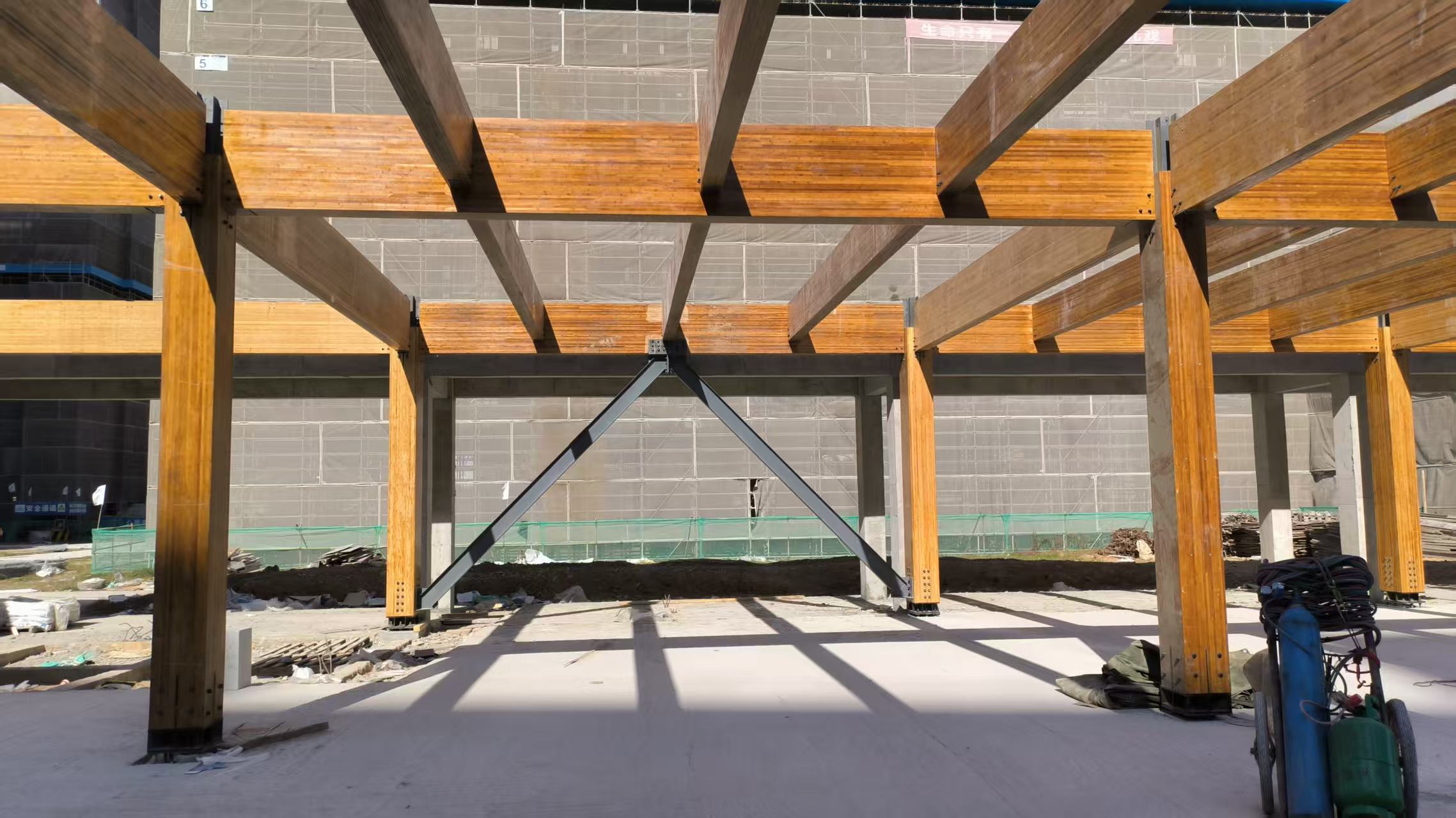
The building employs a robust glubam beam-column frame working in concert with a steel bracing system for lateral stability. This hybrid approach ensures resilience in a region subject to both severe typhoons (basic wind pressure 0.60 kN/m²) and significant seismic activity (Seismic Intensity Grade 7, PGA = 0.22g).
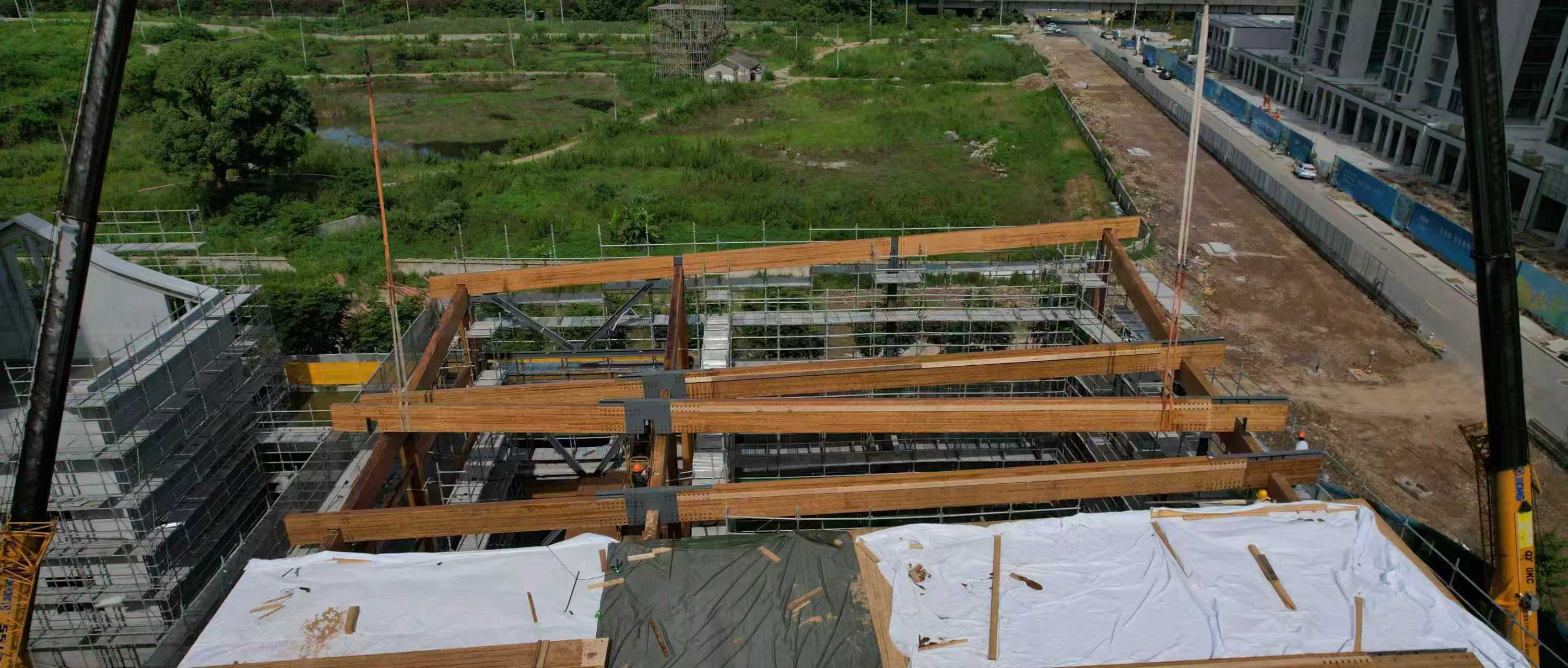
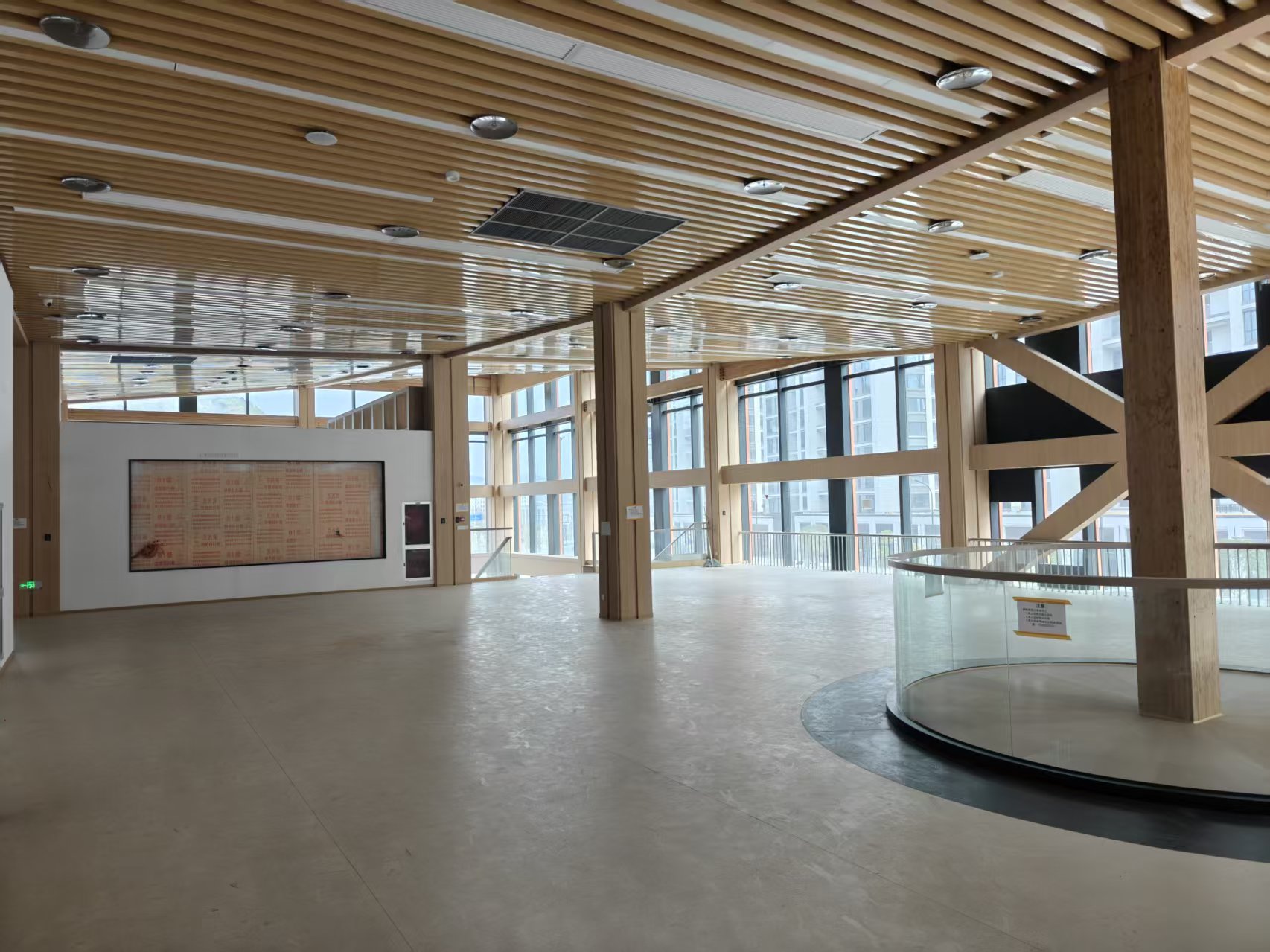
The grand entrance hall features a dramatic "skip-floor" configuration, achieved through precision-manufactured, large-span glubam girders (240×940 mm). In high-stress zones, innovative hybrid glubam-steel columns — with H-shaped steel sections encased in glubam — provide critical load transfer without compromising the building's aesthetic continuity.
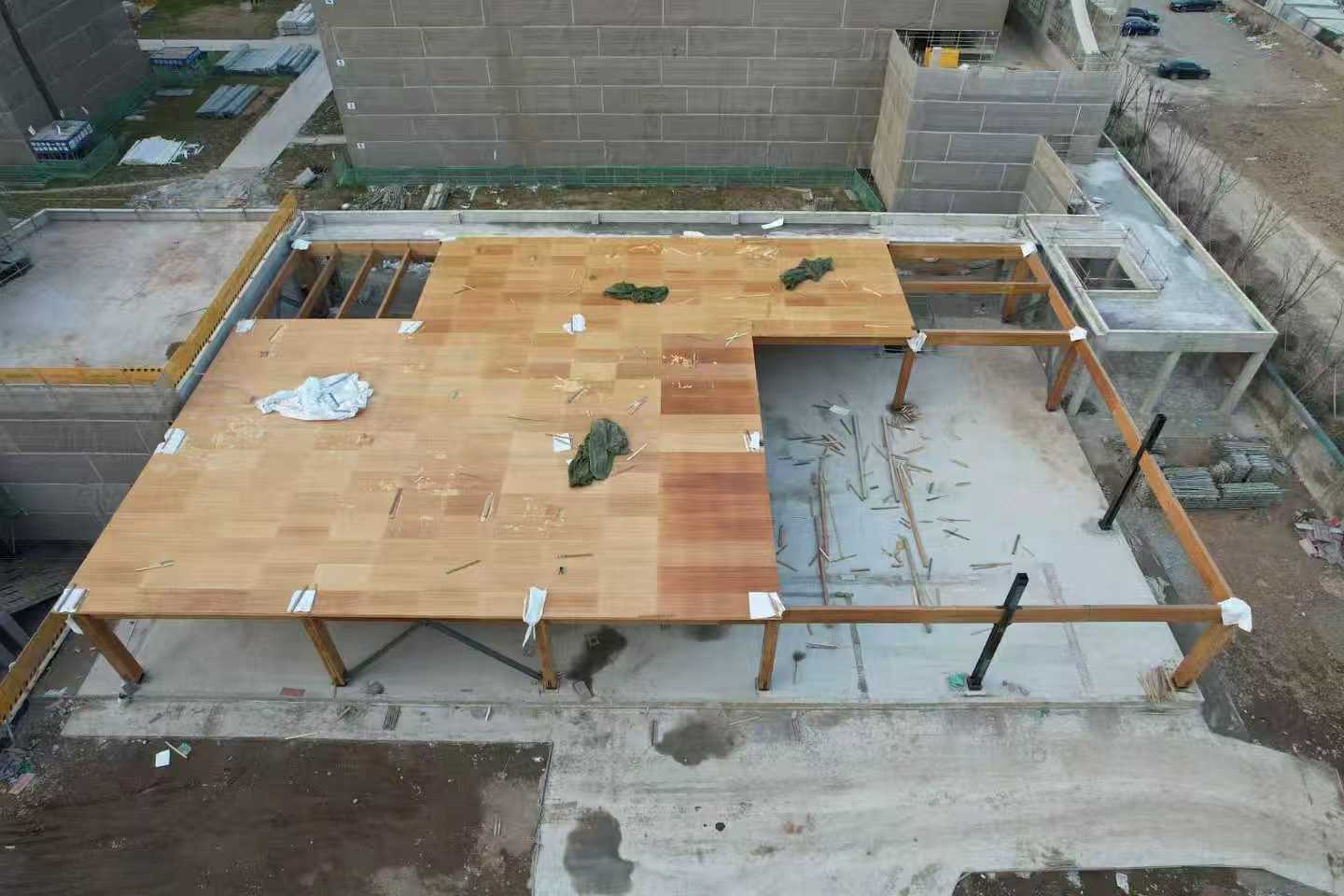
Taking the advantages of the research establishment by the chief structural designer's team, the floor utilizes Cross-Laminated Bamboo Timber (CLBT) slabs, while the geometrically complex curved roof is constructed from Twist Laminated Bamboo Timber (TLBT) plates — evoking the fluidity of ocean waves while maintaining full structural rigor.
The primary structural material, glubam, acts as a significant carbon store. Life Cycle Assessment (stages A1–A5) reveals approximately 81% less embodied energy than concrete and 74% less than steel per square meter of construction area.
The biogenic carbon stored in bamboo and timber components offsets emissions from steel connections and foundations, achieving approximately 74% and 51% lower embodied emissions than concrete and steel alternatives, respectively.
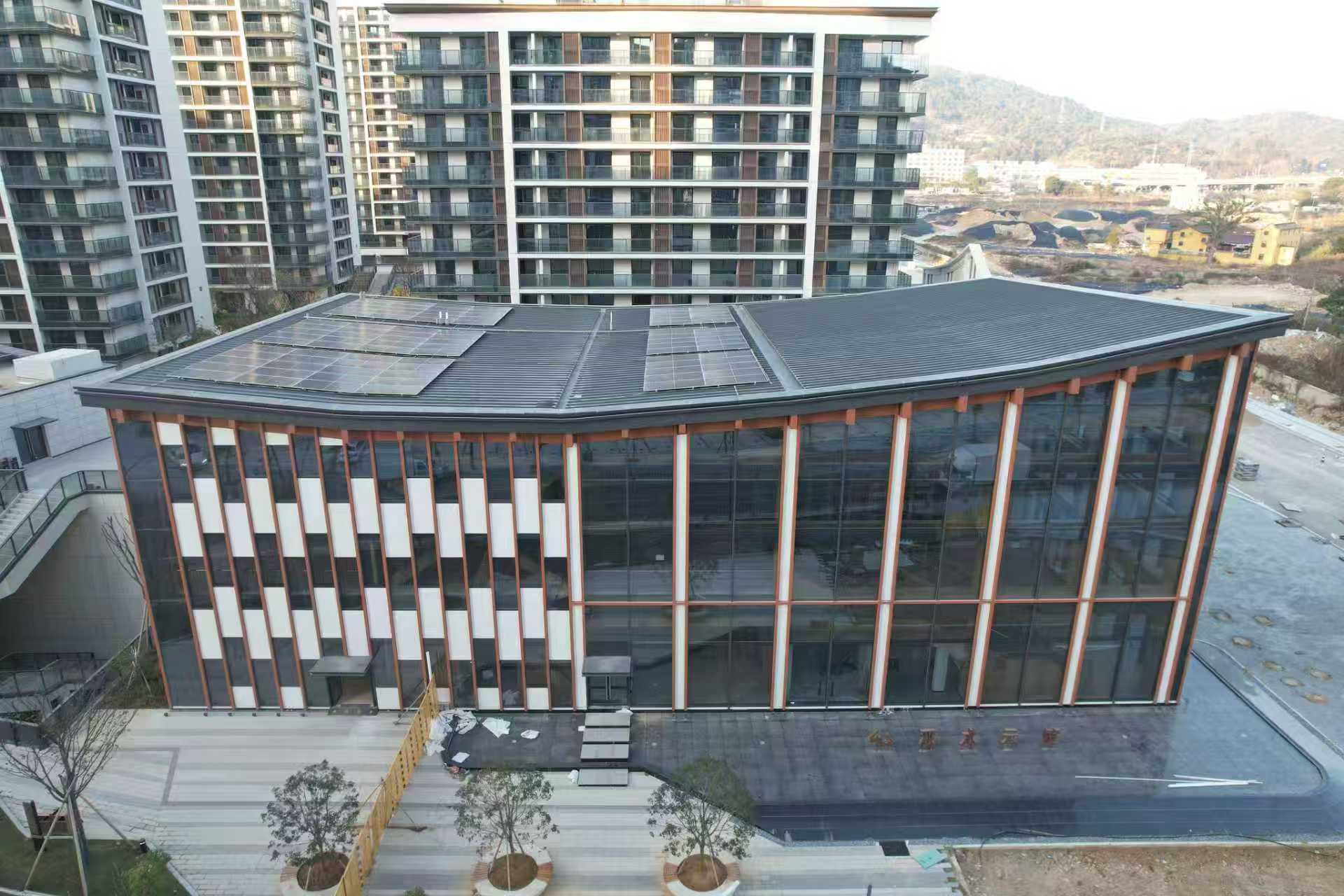
A comprehensive rooftop solar photovoltaic system provides full-coverage renewable energy generation, designed to cover the building's entire operational energy needs.
This effectively renders the building Net-Zero over its operational lifespan. Combined with the superior thermal insulation of the bamboo envelope, the building exemplifies passive-active energy synergy.
The building utilizes a dry construction method with bolted steel connections, facilitating future disassembly, component replacement, and material recycling — fully supporting circular economy principles.
The "platform" construction method minimizes on-site waste and construction time. The structure is designed for a 50-year service life with component replacement capability.
27m Large-Span Girder Installation — Precision-manufactured glubam girders positioned by crane, showcasing the unprecedented scale of engineered bamboo structural components on site
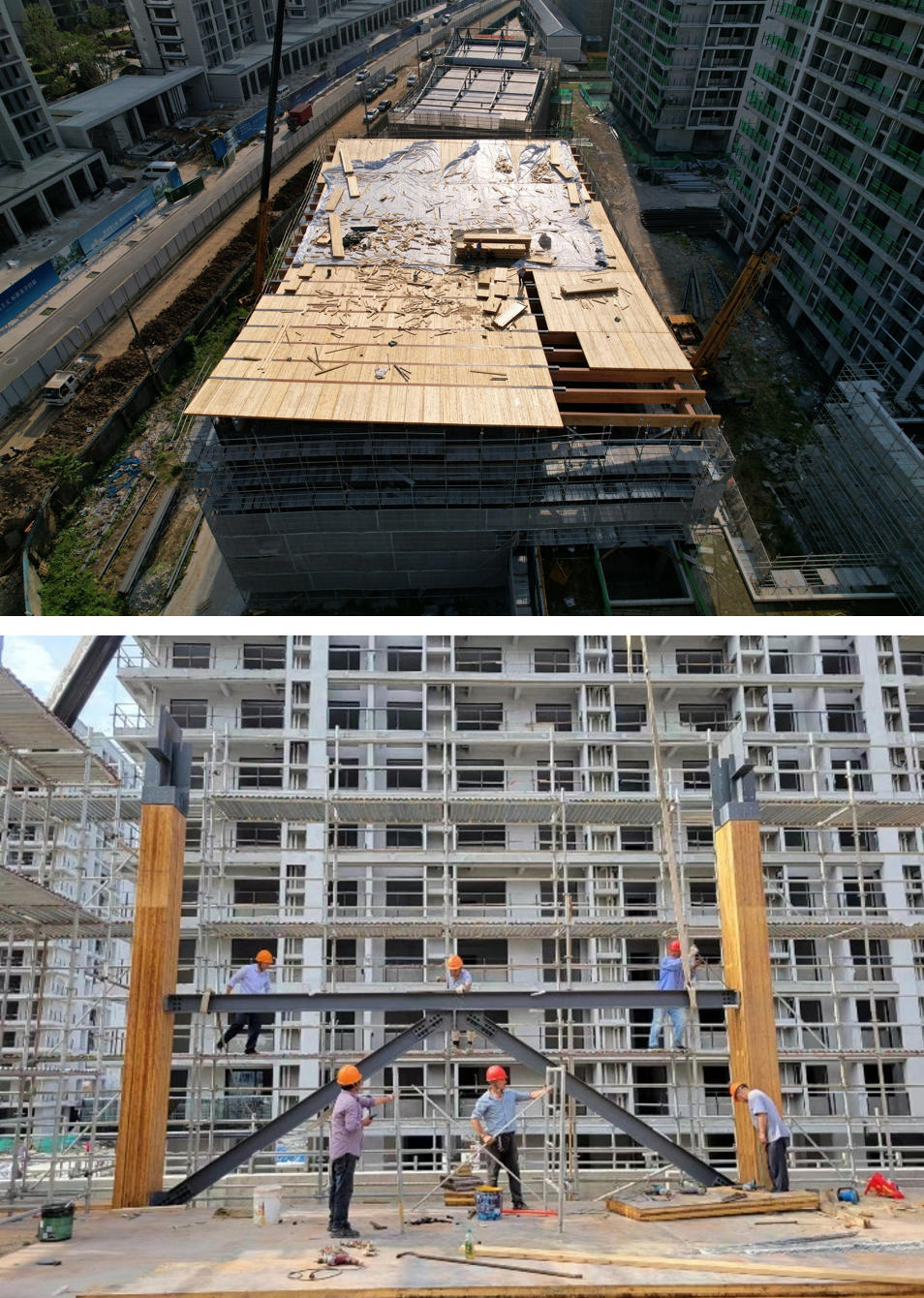
Drawing from modern mass timber practices, the completed first floor served as the working platform for the second story, enabling rapid prefabricated assembly. A total of approximately 400 m³ of glubam was precision-manufactured and erected, including columns, beams, girders, and large-span girders.
A rigorous, multi-level quality assurance protocol was implemented:
Fire resistance is ensured through charring rate calculations and a whole-building automatic sprinkler system, proving that bio-based materials can meet strict public safety codes for large-scale assembly occupancies.
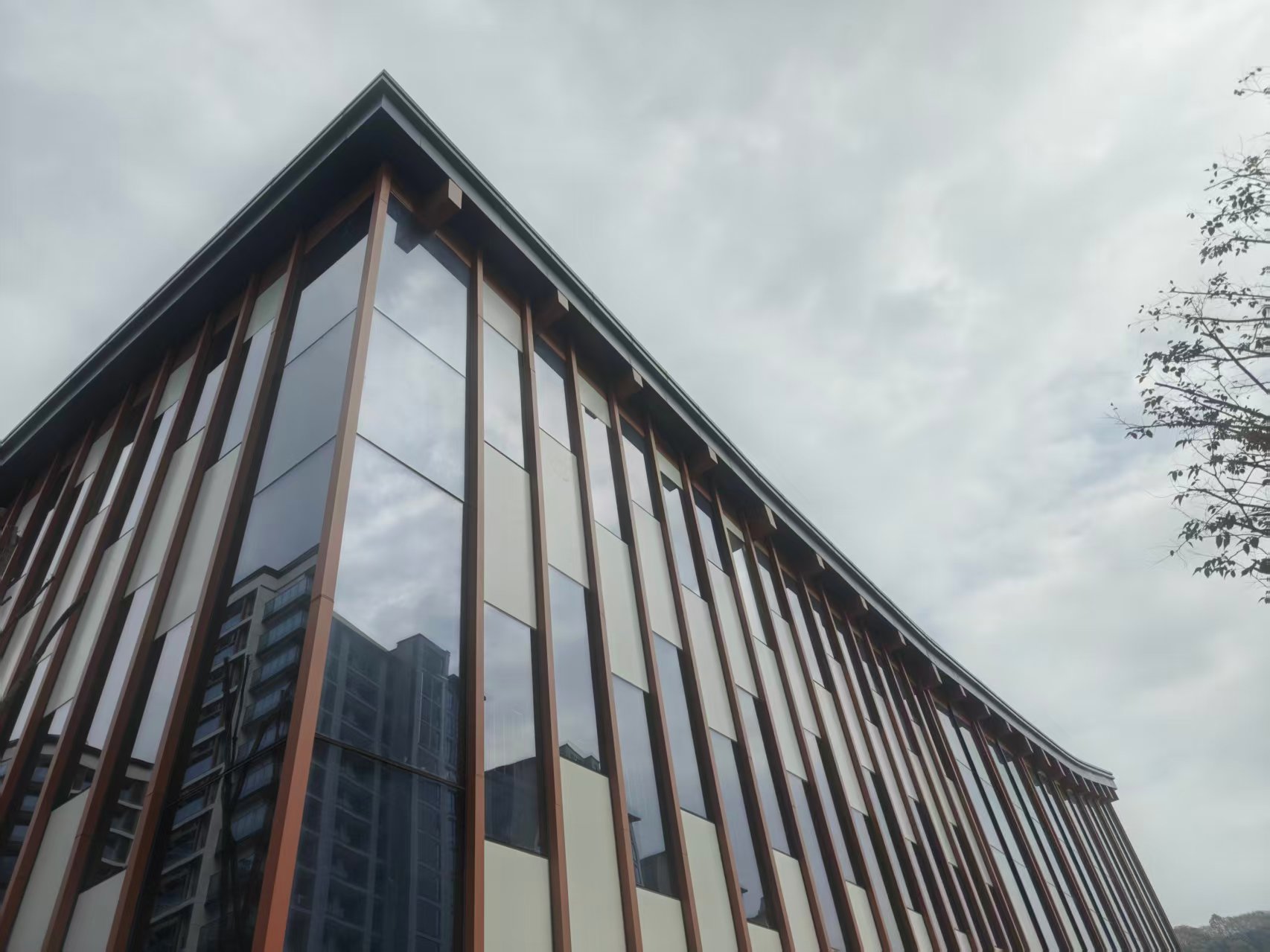
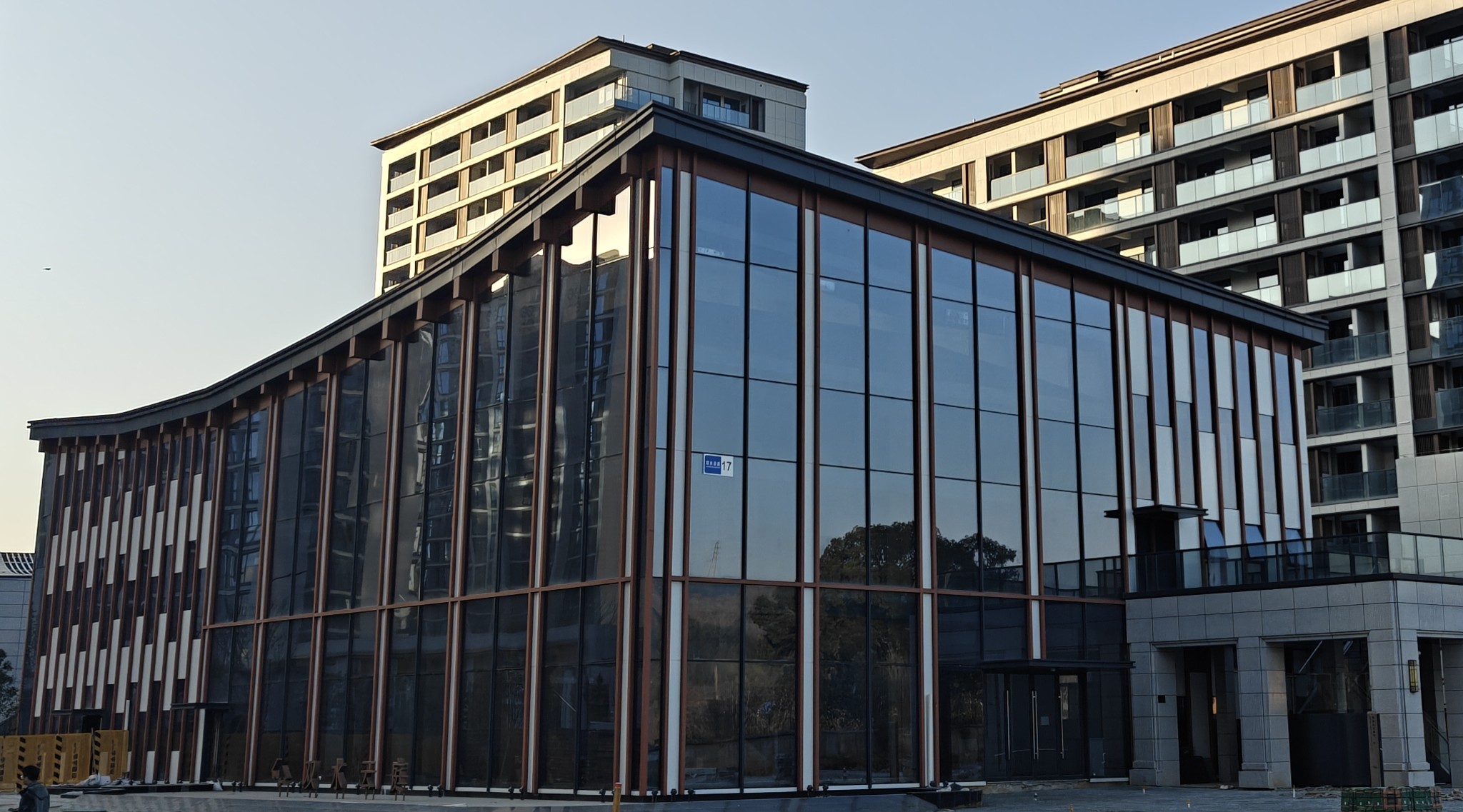
Completed building elevation with bamboo-toned façade and expansive glazing
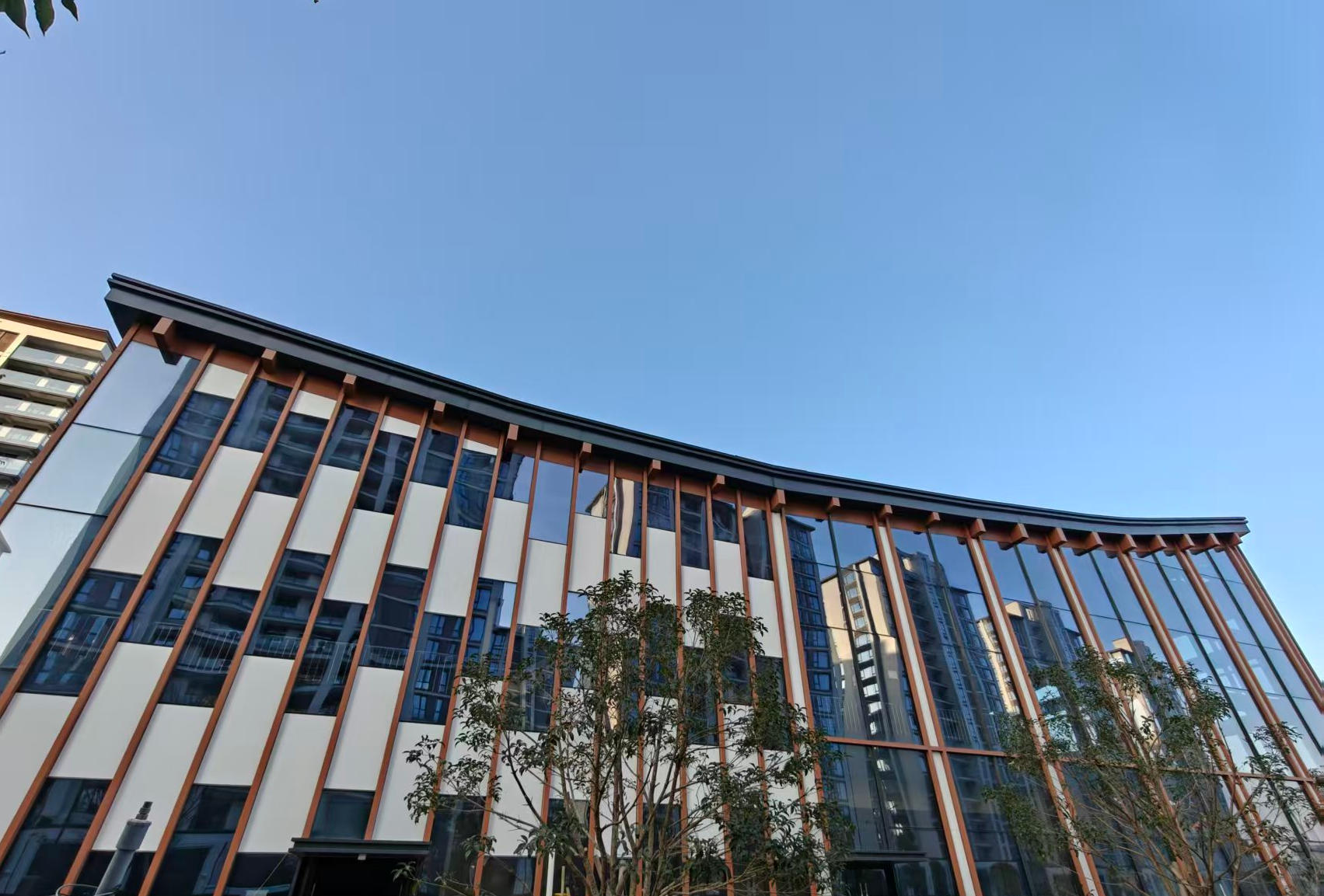
Low-angle view of the inclined curtain wall with copper-toned vertical fins
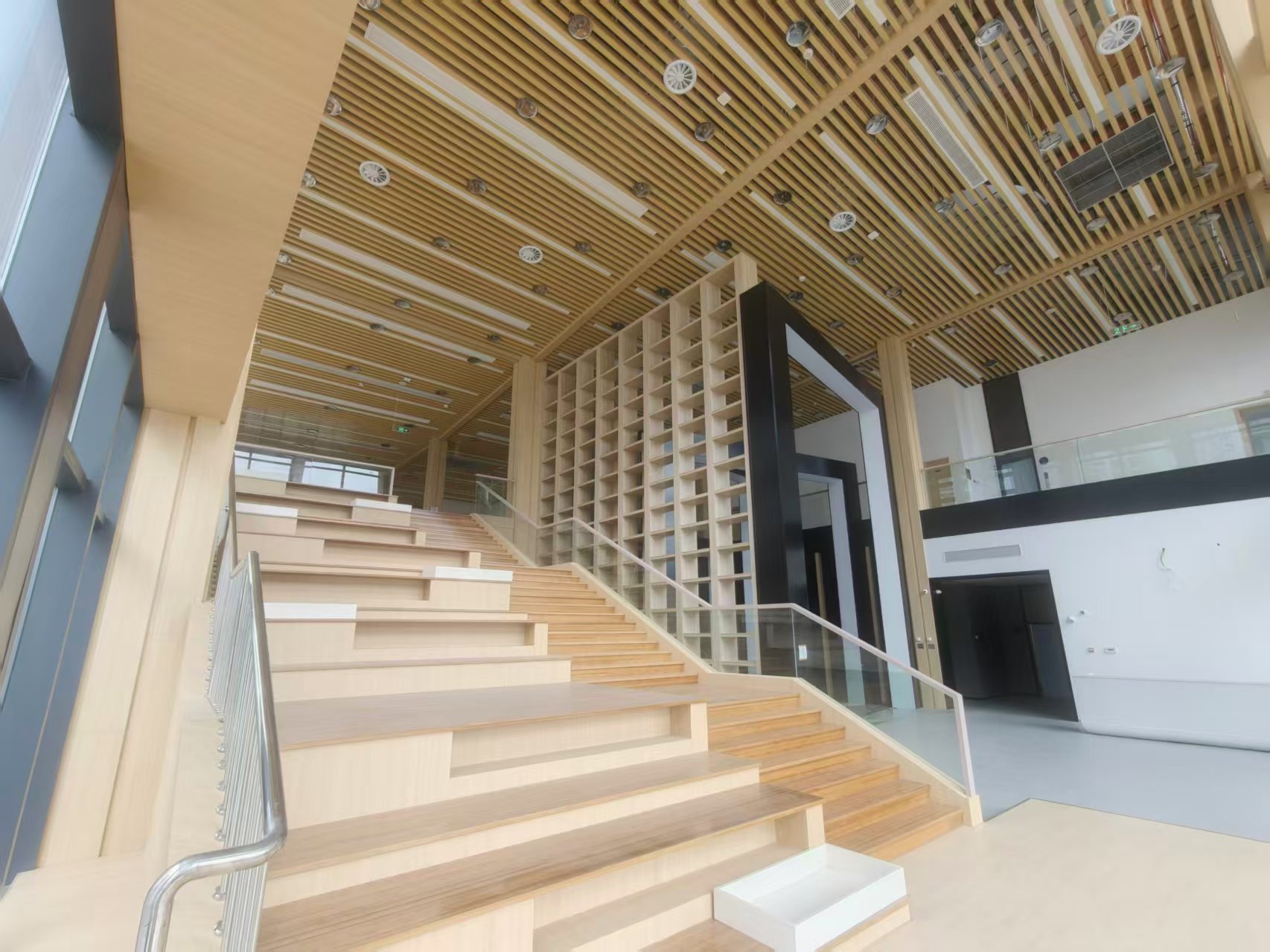
Interior lobby space with exposed glubam beam-column framework
Glubam columns and steel V-braces forming the hybrid lateral resistance system
Platform construction: CLBT floor slabs assembled on the glubam beam-girder framework
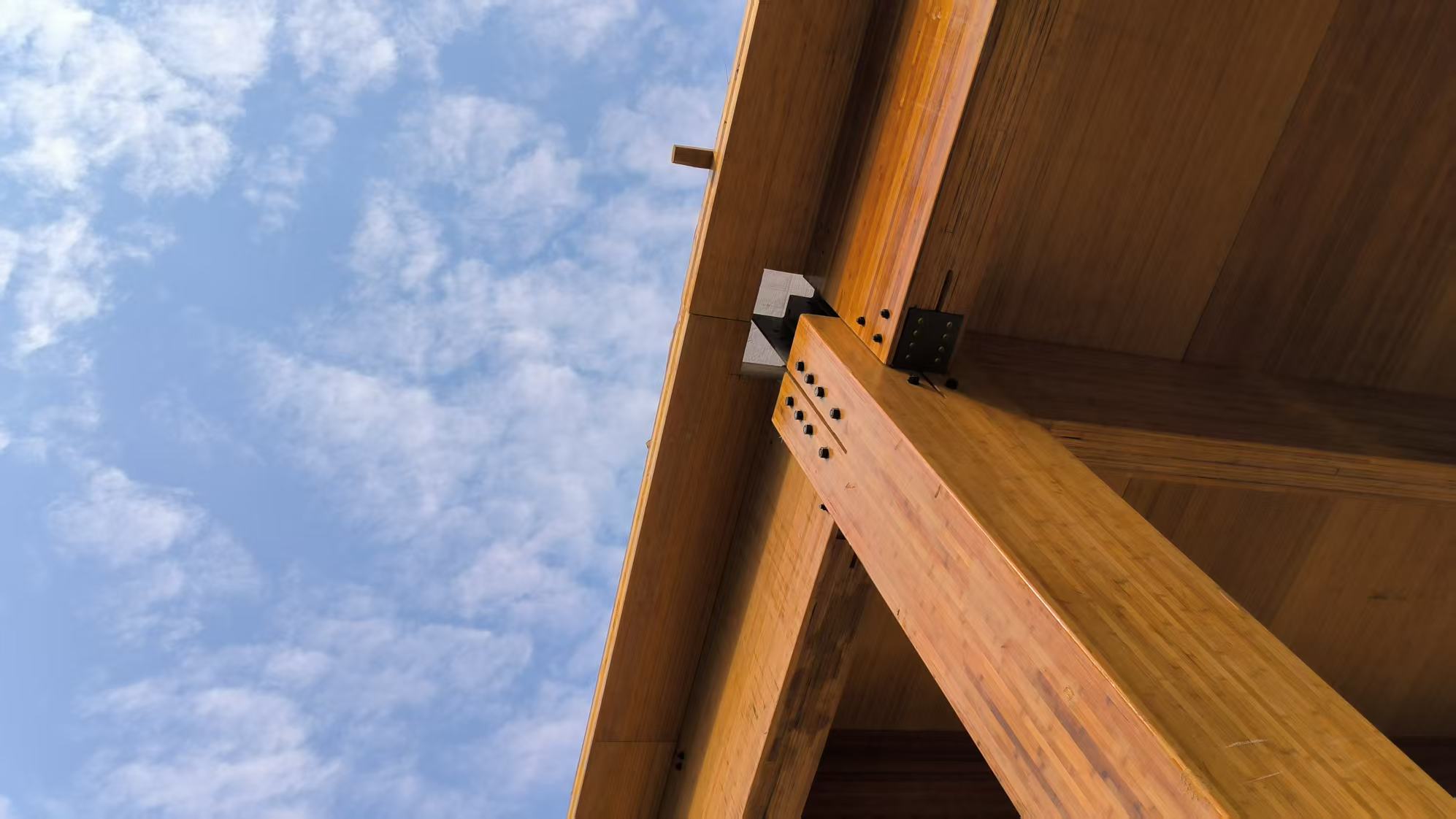
Close-up of glubam structural member with bolted steel gusset plate connection
A powerful synergy between regional engineering excellence and world-class sustainable material research.
Established in 1979, the Ninghai County Architectural Design Institute is a premier state-owned enterprise and the leading technical authority for architectural and geotechnical design in Ninghai. Backed by a multidisciplinary team of registered experts, it delivers robust, end-to-end design solutions — ensuring structural safety, code compliance, and meticulous project management for complex public infrastructure.
Directed by Prof. Yan Xiao (PE, California), the ZJU-Xiao-Lab is a world-preeminent research group in engineered bamboo structural design, with over 20 years of pioneering research in engineered bamboo structures, notably glubam and CLBT technologies. By integrating material science innovation with full-scale testing, the lab provides cutting-edge, low-carbon technological solutions that bridge academic innovation and practical architectural application. Notably, the team's Ninghai Bamboo Tower project was honored with the 2025 ASCE Outstanding Project Award (Under $100 Million category), further affirming the lab's global leadership in sustainable structural engineering.
| Conceptual and Structural System Design | Yan Xiao, PE (California) |
|---|---|
| Structural Designers | S.L. Dai, Y.S. Chu, J.Y. Deng, W.C. Guo, Y.B. Hou, G. Li, X.D. Lin |
| Construction Documentation | Zhejiang University Urban-Rural Planning & Design Institute Co., Ltd. |
| Fabrication | Bamduos New Materials Technology Co., Ltd. |
| General Contractor | Ningbo Huayu Construction, Ltd. |
| Project Management | Ninghai City Investment Group Ltd. / Ninghai Municipal Architecture Design, Ltd. |
| Owner | Ninghai County Investment Group Co., Ltd. |